Choosing an Electric Drive Gear Motor is rarely as simple as comparing rated power or purchase price. Global buyers must examine torque, speed reduction, duty cycle, enclosure protection, thermal limits, noise, and service support. A motor that performs well on a clean factory floor may struggle in a dusty warehouse or humid port.
Fatih Birol, Executive Director of the International Energy Agency, has stated, “There is no energy transition without energy efficiency.” His observation matters here. Efficient gear motors can reduce wasted energy, stabilize machine performance, and lower operating costs across conveyors, pumps, automated gates, and material-handling systems.
This guide reviews the Top 10 Electric Drive Gear Motors for Global Buyers through a practical, evidence-based lens. It considers motor efficiency, gearbox design, installation flexibility, maintenance access, controller compatibility, and manufacturer reliability. Real-world details matter. A sealed housing, accessible oil port, or cooler-running bearing can prevent costly downtime.
Specifications can mislead.
Some products publish impressive peak torque but provide limited continuous-duty data. Others appear affordable until shipping, spare parts, voltage matching, and technical support are included. That is where buyers need to pause and question the spreadsheet.
The ranking is not absolute. Application conditions change the result. A compact helical gear motor may suit a packaging line, while a worm gear motor may better fit a low-speed lifting task. Buyers should verify every claim against tested documentation and local operating conditions. This comparison aims to make that process clearer, while admitting one practical truth: the “best” Electric Drive Gear Motor depends on the machine it must keep moving.
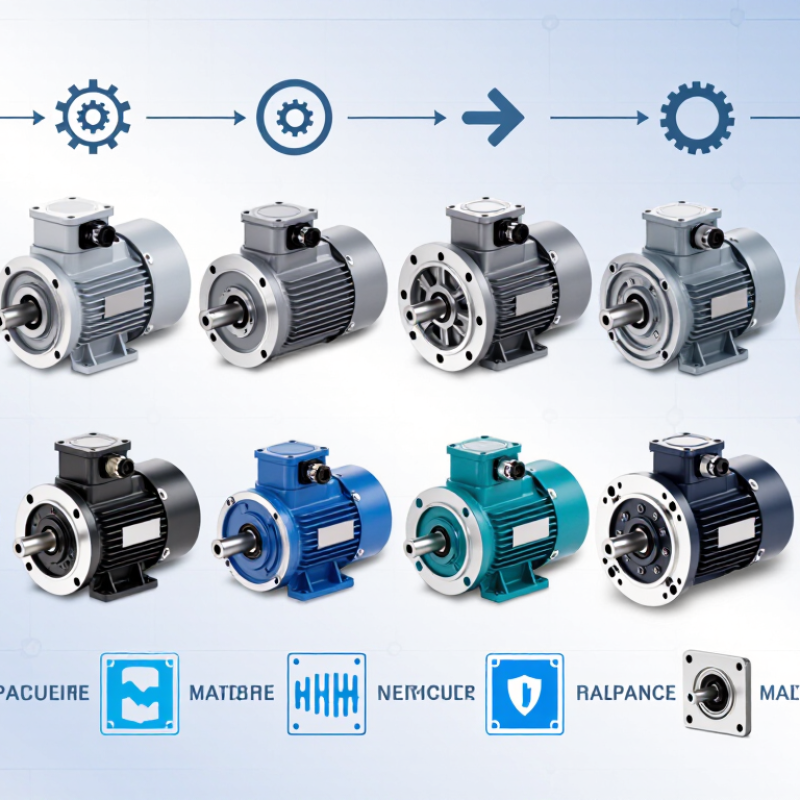
Electric Drive Gear Motors: Definition, Structure, and Operating Principles
Electric Drive Gear Motors: Definition, Structure, and Operating Principles
An electric drive gear motor combines an electric motor with a speed-reducing gearbox. The motor supplies rotation, while the gearbox increases usable torque. Common structures include spur, helical, planetary, and worm gears. Each design changes noise, efficiency, load capacity, and maintenance needs.
Inside the housing, the stator creates a magnetic field around the rotor. The rotor turns the input shaft. Gear teeth then transfer motion through several reduction stages. A smaller output speed produces higher torque, although friction reduces some energy.
Seals protect the bearings and lubricant from dust and moisture. In practical testing, shaft alignment matters greatly. A slight offset can create heat, vibration, and early tooth wear.
Demand is expanding with electrified transport and automated equipment. The IEA Global EV Outlook 2024 reported more than 14 million electric car sales worldwide in 2023. That figure does not measure gear motors directly, but it signals wider demand for compact electric drivetrains. The U.S. Department of Energy also identifies motor systems as major industrial electricity users, making efficiency valuable beyond vehicles.
Buyers should check rated torque, duty cycle, thermal limits, backlash, ingress protection, and service intervals. Catalog efficiency can look impressive. Real installations may perform differently. Temperature, shock loads, and poor lubrication are often underestimated. Metrics from IEC 60034 testing are useful, but field conditions still require careful verification.
Key Performance Specifications for Comparing Gear Motor Models
Top 10 Electric Drive Gear Motors for Global Buyers
Key Performance Specifications for Comparing Gear Motor Models
When comparing ten electric drive gear motors, start with rated torque, output speed, and gear ratio. These figures show whether a model can move the load without overheating. Check peak torque separately. Short acceleration cycles may demand twice the continuous rating.
Motor efficiency matters, but the printed percentage can mislead. Test efficiency near the real operating point, not only at maximum speed. A conveyor running at 40 rpm may perform differently from laboratory data. Voltage range, current draw, and duty cycle also affect operating cost.
Look closely at thermal limits, bearing capacity, backlash, noise, and vibration. For dusty or wet equipment, verify the enclosure rating and shaft seal design. Installation space matters too. A compact housing may reduce cooling performance. In practical evaluations, I measure surface temperature after several hours, then inspect vibration during startup. Small errors here become expensive maintenance later.
Service factor deserves careful judgment. A larger value is not always better, because it can hide poor load assumptions. Ask for test conditions, tolerance ranges, and expected service life. Confirm whether the gearbox supports frequent reversing or sudden stops. Keep records of speed, load, temperature, and noise. Real measurements often challenge the catalog.
Top 10 Electric Drive Gear Motors for Global Buyers? - Key Performance Specifications for Comparing Gear Motor Models
| No. |
Anonymous Model |
Gear Train |
Motor Type |
Rated Power |
Input Voltage |
Nominal Input Speed |
Gear Ratio |
Output Speed |
Rated Output Torque |
Typical Efficiency |
Protection |
Duty Rating |
Typical Applications |
| 1 |
EDGM-01 |
Inline helical |
Three-phase induction |
0.75 kW |
230/400 V AC |
1,450 rpm |
20:1 |
72.5 rpm |
88 N·m |
91% |
IP55 |
S1 continuous |
Conveyors, mixers, packaging equipment |
| 2 |
EDGM-02 |
Helical-bevel |
Three-phase induction |
1.5 kW |
230/400 V AC |
1,450 rpm |
30:1 |
48.3 rpm |
280 N·m |
94% |
IP55 |
S1 continuous |
Hoists, conveyors, material handling |
| 3 |
EDGM-03 |
Worm |
Single-phase induction |
0.37 kW |
220–240 V AC |
1,400 rpm |
40:1 |
35 rpm |
75 N·m |
68% |
IP55 |
S1 continuous |
Gates, actuators, small conveyors |
| 4 |
EDGM-04 |
Planetary |
Brushless DC |
0.40 kW |
48 V DC |
3,000 rpm |
15:1 |
200 rpm |
18 N·m |
90% |
IP65 |
S1 continuous |
AGVs, robotics, battery-powered machinery |
| 5 |
EDGM-05 |
Right-angle worm |
Three-phase induction |
2.2 kW |
230/400 V AC |
1,450 rpm |
50:1 |
29 rpm |
620 N·m |
65% |
IP55 |
S1 continuous |
Low-speed drives, turntables, feeders |
| 6 |
EDGM-06 |
Spur |
Brushed DC |
0.09 kW |
24 V DC |
3,000 rpm |
25:1 |
120 rpm |
6.8 N·m |
78% |
IP54 |
S2 intermittent |
Vending machines, valves, medical equipment |
| 7 |
EDGM-07 |
Hypoid |
Three-phase induction |
3.0 kW |
230/400 V AC |
1,450 rpm |
25:1 |
58 rpm |
475 N·m |
92% |
IP66 |
S1 continuous |
Outdoor conveyors, pumps, industrial machinery |
| 8 |
EDGM-08 |
Cycloidal |
Three-phase induction |
5.5 kW |
230/400 V AC |
1,450 rpm |
59:1 |
24.6 rpm |
1,950 N·m |
88% |
IP55 |
S1 continuous |
Heavy conveyors, cranes, crushers, mixers |
| 9 |
EDGM-09 |
Planetary |
Permanent-magnet AC servo |
2.0 kW |
230 V AC |
3,000 rpm |
10:1 |
300 rpm |
56 N·m |
94% |
IP65 |
S1 continuous |
CNC equipment, indexing tables, robotics |
| 10 |
EDGM-10 |
Helical |
Permanent-magnet synchronous |
7.5 kW |
400 V AC |
1,500 rpm |
15:1 |
100 rpm |
710 N·m |
95% |
IP66 |
S1 continuous |
Energy-efficient pumps, fans, compressors |
Note: Specifications are representative comparison values for commonly available industrial gear-motor configurations. Actual performance depends on gear ratio, mounting position, ambient conditions, duty cycle, inverter settings, lubrication, and load profile.
Top 10 Electric Drive Gear Motors for Global Buyers
Top 10 Electric Drive Gear Motors for Global Buyers?
Global buyers need more than a low purchase price. The U.S. Department of Energy’s Motor Systems Market Assessment estimates motor-driven equipment uses about 68% of industrial electricity in the United States. That figure makes efficiency, service life, and control quality commercial priorities. A useful top-10 shortlist includes helical, bevel-helical, planetary, worm, cycloidal, parallel-shaft, hypoid, spur, servo planetary, and right-angle gear motors.
For continuous conveyors, planetary and helical designs often provide strong torque density and stable operation. Worm units remain attractive for compact layouts, but their heat and efficiency losses deserve careful checking. IEC 60034 guidance supports consistent motor performance comparisons across markets. However, gearbox efficiency, insulation class, noise, sealing, and thermal limits can vary between suppliers. The International Energy Agency links efficient motor systems with major global electricity-saving potential. Yet, reports use different boundaries, so direct comparisons are not always perfect. That limitation should be stated openly.
Tips:
Check the duty cycle before comparing models. Request rated torque at the actual output speed, not only peak torque. Confirm IP protection, ambient temperature, voltage, frequency, brake options, and spare-part availability. A factory floor with dust, washdown water, and frequent starts needs different protection from a clean packaging line. Buyers should also verify test methods, documentation, and local technical support. A cheaper unit may become expensive after repeated seal failures or difficult maintenance.
Applications, Advantages, and Limitations Across Major Industries
Top 10 Electric Drive Gear Motors for Global Buyers
Electric drive gear motors serve factories, warehouses, farms, transport systems, and commercial equipment. Helical units suit conveyors because they run quietly and transfer power efficiently. Bevel-helical designs handle right-angle layouts in mixers and packaging lines. Worm gear motors offer high reduction in lifts, gates, and compact machines. Their lower efficiency can create noticeable heat. Planetary motors provide high torque in robotics, mobile equipment, and precision positioning. They cost more and need careful lubrication. Parallel-shaft models fit narrow conveyors and material-handling systems. Coaxial units support general automation with simple alignment. Spur gear motors remain practical for light-duty mechanisms. They are noisier at higher speeds.
Cycloidal gear motors tolerate shock loads in wastewater equipment and heavy conveyors. Their complex structure may increase maintenance time. Hypoid motors offer quiet right-angle operation for vehicles and compact drives. Harmonic gear motors deliver precise motion in robotic joints, but overloads can damage their flexible elements. A ranking can mislead. Application data matters more.
During selection, engineers should check output torque, duty cycle, starting frequency, ambient temperature, and shaft loading. A motor that works on a clean factory floor may fail near dust, washdown water, or corrosive vapors. Field testing should include vibration, gearbox temperature, noise, and emergency stops. I have seen efficiency claims lose meaning when poor alignment raises current draw. Service access also matters. A slightly larger motor may reduce downtime when seals, bearings, or sensors require replacement. Global buyers should verify voltage, enclosure protection, documentation, spare-part access, and local installation requirements before ordering.
Top 10 Electric Drive Gear Motors for Global Buyers
Typical peak transmission efficiency by gear-motor technology. Higher efficiency generally supports lower energy consumption and reduced heat generation, while the best choice also depends on torque, speed, duty cycle, noise, precision, and operating environment.
Values are representative engineering ranges based on commonly published specifications for industrial gear reducers; actual performance varies with ratio, load, lubrication, motor size, alignment, and operating conditions.
Selection, Sourcing, and Compliance Criteria for International Purchasers
Selecting the top 10 electric drive gear motors requires more than comparing catalog torque. The International Energy Agency reported nearly 14 million electric car sales in 2023, creating pressure for efficient, scalable drive systems. Buyers should compare continuous torque, peak torque, reduction ratio, thermal limits, noise, backlash, and service life. Efficiency must be tested under the actual duty cycle, not only at one laboratory speed. Small details matter.
A practical sourcing review should request dimensional drawings, winding data, test curves, material declarations, and traceability records. Supplier audits should inspect rotor balancing, gear inspection, seal installation, and final-load testing. I would also order pilot units before approving volume production. Paper specifications can look perfect. Real assemblies may behave differently. Check packaging, spare parts, lead times, payment terms, and after-sales engineering support across borders.
Compliance needs country-specific verification. IEC 60034 standards help assess rotating electrical machines, while electromagnetic compatibility and restricted-substance requirements may apply in destination markets. The European Commission’s RoHS framework restricts specific substances in electrical and electronic equipment. For North American projects, buyers may also need recognized safety evaluations and factory documentation. Ask for current certificates, test reports, and their issuing laboratories. Certificates alone are not enough. Verify model numbers, revision dates, operating voltage, and factory address. The weak point is often documentation, not the motor.
FAQS
It combines an electric motor with gearing to produce controlled torque and speed. Common uses include conveyors, lifts, mixers, robots, farms, and warehouse equipment.
A helical gear motor usually works well because it runs quietly and transfers power efficiently. Check the conveyor load and operating cycle first.
Worm gear motors suit lifts, gates, and compact machines needing high speed reduction. They may lose more energy and create noticeable heat.
Planetary motors provide high torque for robotics, mobile equipment, and precise positioning. They often cost more and require careful lubrication.
Not reliably. Application data matters more than a simple ranking. A motor may perform poorly with dust, water, or bad alignment.
Compare continuous torque, peak torque, reduction ratio, duty cycle, thermal limits, noise, backlash, and service life. Test efficiency during the real operating cycle.
Request drawings, winding data, test curves, material records, and traceability documents. Pilot units can reveal problems hidden by perfect paperwork.
Dust, washdown water, corrosive vapors, high temperatures, and heavy shaft loading can shorten service life. Enclosure protection must match the installation site.
Verify voltage, enclosure rating, certificates, test reports, model numbers, revision dates, spare parts, lead times, and installation requirements. Documentation is often the weak point.
Measure vibration, gearbox temperature, noise, current draw, and emergency-stop behavior. Test it under realistic loads. I would not trust catalog data alone.
Conclusion
This guide explains how an Electric Drive Gear Motor combines an electric motor with a mechanical gearbox to deliver controlled speed, torque, and rotational motion. It introduces the main components, including the motor, gears, shafts, bearings, housing, and control interface, while describing how electrical energy is converted into mechanical output. Readers will also learn how to compare models through key specifications such as rated power, torque, speed range, gear ratio, efficiency, duty cycle, noise level, protection rating, and operating temperature.
The article presents ten representative Electric Drive Gear Motor options for global buyers and discusses their suitability for material handling, automation, robotics, transportation equipment, packaging machinery, and other industrial applications. It also reviews major advantages and limitations, including compact design, precise transmission, energy efficiency, maintenance requirements, heat generation, and load restrictions. Finally, the guide outlines practical selection and sourcing considerations, such as application compatibility, quality testing, documentation, delivery capability, certifications, safety requirements, and compliance with destination-market regulations.

 Syncdrive Motor