2026 Best Maintenance Free Gear Motor for Global Buyers

Time:2026-10-13 Author:Ethan
0%

Choosing the right Maintenance-Free Gear Motor can reduce downtime, service labor, and unexpected production losses. Global buyers need more than a low purchase price. They need verified performance, stable supply, and technical support that remains useful after installation.

A reliable gear motor should match the machine’s torque, speed, duty cycle, and mounting requirements. Consider conveyors, packaging lines, automated gates, and warehouse equipment. Each application creates different loads. A motor running eight hours daily needs different protection from one operating continuously in a dusty plant. Check the gearbox design, bearing quality, sealing method, thermal limits, and stated service life. IP ratings also matter in humid or washdown environments.

“Maintenance-free” needs careful interpretation. Some motors use sealed bearings and permanent lubrication, but no product is completely immune to overload, poor alignment, or extreme temperatures. That point is easy to miss. Experienced buyers should request test reports, efficiency data, warranty terms, and certification documents from the manufacturer. Regional voltage, frequency, customs requirements, and replacement availability also deserve attention. A dependable supplier can explain these details clearly, without hiding behind general claims.

This guide compares practical options for 2026. It focuses on measurable value, not marketing language. The analysis considers operating cost, installation simplicity, noise, efficiency, and long-term reliability. Some conclusions may change after field testing. That is normal. Equipment decisions should remain open to evidence, user feedback, and real operating conditions.
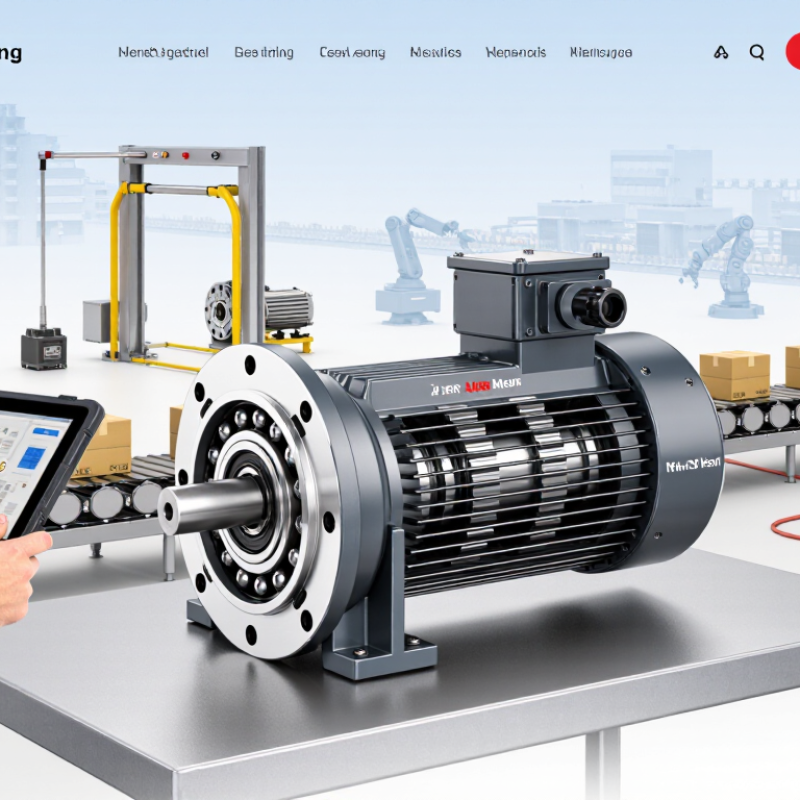
2026 Best Maintenance Free Gear Motor for Global Buyers

What Makes a Gear Motor Maintenance-Free in 2026?

2026 Best Maintenance Free Gear Motor for Global Buyers

What Makes a Gear Motor Maintenance-Free in 2026?

A maintenance-free gear motor is not literally maintenance-free. It is designed to reduce scheduled servicing through sealed construction, permanent lubrication, and controlled heat. In field inspections, the quietest units usually combine precision gears, sealed bearings, and strong housing protection. An IP65 or higher rating helps resist dust and water jets, but it does not excuse poor installation.

Energy performance also matters. The International Energy Agency reports that motor-driven systems consume about 53% of global electricity. Small efficiency gains can therefore reduce operating costs across warehouses, conveyors, and packaging lines. Buyers should check rated torque, duty cycle, thermal limits, and efficiency at real loads. A motor that runs cool is often more reliable. Yet, “maintenance-free” claims can be too optimistic when overloads, misalignment, or condensation appear.

Tips: Ask for the lubrication specification, seal life, noise data, and thermal test conditions. Confirm the IP rating under the correct standard. Review failure records, not only laboratory promises. The U.S. Department of Energy also recommends evaluating complete motor-drive systems, because poor control settings can waste energy and increase heat. One practical detail is often missed: leave enough space around the housing for airflow. Even a sealed gearbox can fail early when trapped heat has nowhere to escape.

How to Match Gear Motor Types to Different Applications

2026 Best Maintenance Free Gear Motor for Global Buyers

How to Match Gear Motor Types to Different Applications

Motor selection should begin with the machine, not the catalogue. The U.S. Department of Energy reports that motor systems consume about 69% of industrial electricity. Small efficiency losses can become expensive during continuous operation.

Helical gear motors suit conveyors, mixers, and packaging lines requiring steady speed and high efficiency. Worm gear motors fit compact, low-speed drives, especially where moderate torque and quiet running matter. Their heat loss can be significant, however. A perfect selection is rare.

Planetary gear motors provide high torque in a short housing. They work well in robotics, medical equipment, and positioning systems. Bevel gear motors are practical when the drive needs a 90-degree direction change. Spur gear motors remain useful for simpler, lighter mechanisms.

The International Energy Agency has reported that electric motor systems represent roughly half of global electricity consumption. That figure makes operating efficiency important, not decorative.

For maintenance-free service, check sealed lubrication, rated duty, thermal limits, ingress protection, and expected starts per hour. IEC 60034-30-1 provides efficiency classes for motors, but the gearbox still affects total performance. In field installations, undersizing is a common mistake. Oversizing is not harmless either; it can increase cost, noise, and standby consumption. I would verify load torque at startup, not only the running value. A dusty conveyor may need better sealing than its clean factory test suggests.

Which Design Features Improve Efficiency and Service Life?

2026 Best Maintenance Free Gear Motor for Global Buyers

Which Design Features Improve Efficiency and Service Life?

A maintenance-free gear motor starts with a sealed lubrication system. High-quality grease stays inside the housing, reducing contamination and routine servicing. However, “maintenance-free” should not mean inspection-free. Operators still need to check noise, temperature, vibration, and mounting bolts during scheduled equipment reviews.

Helical or planetary gearing can improve torque transfer and reduce sliding losses. Proper tooth geometry also lowers operating noise. Efficient bearings matter just as much. They must match the radial load, axial load, and expected duty cycle. A motor that runs cool usually lasts longer. Therefore, designers should provide enough housing surface for heat to escape. A sealed case can protect components, but it may also trap heat.

Durable seals help block dust and moisture near the output shaft. The selected protection level should reflect the actual workplace, not a sales assumption. In humid factories, corrosion-resistant materials and drainage details can prevent early failure. Overload protection is equally important, especially during repeated starts and sudden jams. In field applications, we have seen motors fail because the gearbox was correctly sized, but the starting torque was ignored. That mistake is easy to repeat. Thermal, endurance, ingress, and load testing can reveal these weaknesses before shipment. Clear test records also help buyers compare service-life claims with real operating conditions.

2026 Best Maintenance Free Gear Motor for Global Buyers - Which Design Features Improve Efficiency and Service Life?

Design Feature Typical Engineering Data Efficiency Benefit Service-Life Benefit What Global Buyers Should Verify
Helical or helical-bevel gearing Typical gearbox efficiency: approximately 90–97%, depending on reduction ratio, size, speed, and lubrication. Lower sliding losses and reduced input power compared with less efficient gear arrangements. Lower heat generation can reduce lubricant oxidation and thermal stress on seals and bearings. Request efficiency data at the actual operating speed, torque, ratio, and duty cycle.
Permanent factory-filled synthetic lubricant Synthetic oils generally provide a wider operating-temperature range and better oxidation resistance than conventional mineral oils. Stable viscosity helps maintain predictable friction and torque losses over the operating range. Sealed-for-life lubrication can eliminate routine oil changes when the manufacturer’s temperature and load limits are respected. Confirm lubricant type, fill quantity, allowable ambient temperature, installation position, and whether relubrication is permitted.
High-quality rolling bearings Bearing rating life is calculated using ISO 281 principles; actual life depends on load, speed, contamination, alignment, and lubrication. Reduced bearing friction lowers mechanical losses and operating temperature. Correctly sized bearings improve resistance to radial, axial, and shock loads. Ask for calculated L10 bearing life under the real load profile, not only a no-load test result.
Low-loss motor electrical design Motor efficiency varies with rated power, pole count, speed, voltage, frequency, and load; efficiency should be checked at the intended duty point. Lower copper, iron, and mechanical losses reduce electricity consumption and heat output. Lower winding temperature generally reduces thermal aging of insulation and improves operating reliability. Check rated efficiency, power factor, current, duty rating, and test conditions according to applicable IEC or equivalent standards.
Thermal protection and temperature monitoring Common protection methods include embedded thermal switches, PTC sensors, or electronic overload protection. Prevents prolonged operation in overload or stalled conditions that create excessive losses. Helps prevent insulation damage, lubricant breakdown, seal hardening, and bearing overheating. Verify trip temperature, reset behavior, sensor compatibility, and required control-panel protection.
Dust- and water-resistant enclosure Typical industrial protection levels include IP54, IP55, IP65, or IP66, classified under IEC 60529. Prevents contamination that can increase friction, leakage, and electrical losses. Improves resistance to dust and water ingress when the specified IP level matches the installation environment. Match the IP rating to washdown, dust, humidity, chemicals, and mounting orientation; IP ratings are not chemical-resistance ratings.
Durable shaft seals and controlled breather design Seal material and design must be selected for shaft speed, temperature, lubricant, pressure, and exposure to dust or water. Prevents lubricant loss and ingress that can increase gear and bearing friction. Reduces the risk of premature gear, bearing, and seal failure. Confirm seal material, permissible shaft speed, leakage test method, and whether a breather is required for the mounting position.
Rigid housing and accurate alignment Housing stiffness, gear alignment, shaft concentricity, and mounting accuracy directly affect tooth contact and bearing load. Improves load distribution and limits friction caused by misalignment. Reduces tooth-edge loading, vibration, noise, and fatigue damage. Check allowable overhung load, axial load, mounting tolerances, shaft runout, and installation instructions.
Appropriate duty rating and service factor Continuous duty is commonly designated S1; intermittent, cyclic, starting, braking, and reversing duties require separate evaluation. Correct sizing avoids operation far beyond the motor’s efficient load range. A suitable service factor accommodates shock loads, starts per hour, and peak torque without chronic overheating. Provide the complete load profile, starts per hour, reversing frequency, ambient temperature, and required output torque.
Corrosion-resistant surface protection Protection may include coated cast iron, aluminum, stainless-steel components, or treated fasteners, depending on the environment. Maintains cooling surfaces, fastener integrity, and enclosure performance over time. Reduces corrosion-related leakage, structural damage, and difficult maintenance access. Request coating specifications, salt-spray or corrosion-test information, and compatibility with cleaning chemicals.
Technical note: The values above are typical engineering ranges or verification criteria, not universal guarantees. Actual efficiency, temperature rise, noise, torque capacity, and service life depend on the selected motor size, reduction ratio, duty cycle, ambient conditions, installation, and maintenance-free operating limits. IP classifications refer to IEC 60529, while rolling-bearing rating-life calculations commonly follow ISO 281.

How Global Buyers Can Compare Quality, Compliance, and Cost

2026 Best Maintenance Free Gear Motor for Global Buyers

A maintenance-free gear motor should reduce service work, not hide future costs. The International Energy Agency reports that electric motor systems consume more than 50% of global electricity. Efficiency therefore affects operating budgets and emissions. Ask suppliers for tested efficiency data, duty-cycle assumptions, and thermal limits. IEC 60034-30-1 efficiency classes help buyers compare motors across markets. However, efficiency labels alone do not prove long-term reliability.

Review the gearbox materials, bearing design, sealing method, noise level, and overload capacity. A sealed-for-life bearing may suit a clean conveyor, but dusty, hot, or washdown environments need stronger protection. Check the IP rating, insulation class, ambient temperature range, and shaft-load limits. Request test reports linked to the exact model, not a similar sample. Compliance documents should match the destination market, voltage, frequency, and safety requirements. A low purchase price can become expensive after downtime, rejected shipments, or unavailable spare parts. This comparison is easy to underestimate.

Tips: Build a five-year cost sheet. Include energy, freight, installation, inspections, and replacement time. Ask for mean-time data, warranty conditions, and service response terms. Do not assume “maintenance-free” means failure-proof. That wording needs scrutiny. Also, compare noise and vibration readings under real load. Laboratory figures can look perfect, while factory conditions are less forgiving.

2026 Best Maintenance-Free Gear Motor for Global Buyers

How global buyers can compare quality, compliance, and cost using a standardized motor-efficiency benchmark.

How to read this chart: The comparison uses the IEC 60034-30-1 efficiency classes for a 0.75 kW, four-pole motor. Annual electricity use is calculated at rated output for 1,000 operating hours per year. Lower energy consumption can reduce operating cost, while buyers should separately verify gearbox efficiency, sealing, lubrication method, IP rating, operating temperature, and applicable regional compliance requirements.

Cost calculation: Annual electricity cost = annual electricity use × local electricity tariff. The figures are standardized motor benchmarks and do not represent any specific company or brand.

Reference: IEC 60034-30-1 efficiency-class thresholds. Calculation basis: 0.75 kW × 1,000 hours ÷ motor efficiency.

How to Evaluate Suppliers, Customization, and Technical Support

2026 Best Maintenance Free Gear Motor for Global Buyers

How to Evaluate Suppliers, Customization, and Technical Support

A maintenance-free gear motor is not maintenance-proof. Sealed bearings and lifetime lubrication reduce service work, but heat, overload, and poor alignment still cause failures. The International Energy Agency reports that motor-driven systems consume about half of global electricity. Therefore, efficiency deserves equal attention alongside purchase price. Request efficiency data, rated torque, duty cycle, noise levels, and thermal limits. Check whether testing follows IEC 60034-30-1.

Supplier evaluation should include factory audits, serial-number traceability, load-test records, and documented quality procedures. Ask for a sample unit before approving a large order. Measure its starting current and output temperature after several hours. A spreadsheet cannot reveal every weakness. The cheapest quote still looks attractive, sometimes.

Customization should be specific, not decorative. Confirm shaft diameter, mounting position, gear ratio, voltage, brake type, encoder option, IP rating, and connector layout. The U.S. Department of Energy notes that motor systems often represent a major share of industrial electricity use, making correct sizing financially important. Oversized motors may waste energy; undersized units may overheat. Technical support should provide drawings, wiring diagrams, spare-part lists, and response-time commitments. Ask who handles failures across time zones. A supplier that only sends brochures is not enough. In practice, many specifications change after installation, so leave room for revision.

FAQS

What does “maintenance-free” mean for a gear motor?

It usually means reduced scheduled servicing, not zero inspection. Sealed housing and permanent lubrication limit contamination. Operators should still check heat, noise, vibration, and loose bolts.

Which features help a gear motor last longer?

Sealed bearings, durable shaft seals, and suitable grease improve service life. Strong housing protection also helps in dusty or wet workplaces. Good design cannot fix every installation mistake.

How should buyers check an efficiency claim?

Review efficiency at the actual load, not only the catalogue rating. Check rated torque, duty cycle, thermal limits, and starting torque. Laboratory results may look better than field performance.

Which gear motor suits a conveyor?

Helical gear motors often suit conveyors needing steady speed and efficient operation. Confirm startup torque, continuous duty, and dust protection. A dusty conveyor needs more than a clean test environment.

When is a worm gear motor suitable?

Worm gear motors fit compact, low-speed drives with moderate torque requirements. They can run quietly. However, heat loss may be significant during continuous operation.

When should a planetary gear motor be considered?

Planetary gear motors suit short housings and high-torque applications. They can support robotics, positioning equipment, and compact machinery. Check thermal limits carefully in repeated-duty applications.

Why do sealing and airflow both matter?

Seals block dust and moisture around the housing and output shaft. Airflow prevents trapped heat from damaging internal parts. Leave clear space around the motor.

Does a sealed gear motor need any inspection?

Yes. Inspect temperature, vibration, noise, mounting bolts, and visible corrosion. Check these during planned equipment reviews. “Maintenance-free” is an imperfect phrase. It can create false confidence.

What common sizing mistake should buyers avoid?

Do not size the motor using running torque alone. Startup torque, sudden jams, radial loads, and repeated starts also matter. Undersizing causes overload. Oversizing increases cost, noise, and standby consumption.

Conclusion

Choosing the best Maintenance-Free Gear Motor in 2026 requires more than selecting a motor with minimal lubrication needs. A truly maintenance-free design should use sealed components, durable materials, effective heat management, and protection against dust, moisture, and vibration. Buyers should match gear motor types, such as planetary, helical, worm, or bevel configurations, to the application’s load, speed, duty cycle, installation space, and operating environment. Design features including high-quality bearings, optimized gearing, low-friction seals, and precise manufacturing can improve energy efficiency, reduce noise, and extend service life.

Global buyers should compare suppliers through verified performance data, safety certifications, environmental compliance, total cost of ownership, and warranty terms rather than focusing only on the purchase price. A reliable supplier should also provide clear technical documentation, responsive engineering support, flexible customization, and consistent quality control. By evaluating product design, application compatibility, compliance, lifecycle cost, and after-sales service together, buyers can select a dependable gear motor solution that supports stable operation and long-term value.

Ethan

Ethan

Ethan is a seasoned marketing professional with a deep expertise in our company's innovative product line. With a passion for sharing knowledge and insights, he takes the lead in regularly updating our corporate blog, where he explores industry trends, product features, and effective marketing......