Choosing the 2026 Best Powerful Gear Motor for Global Buyers requires more than comparing torque figures. A Powerful Gear Motor must match the machine, duty cycle, operating environment, and regional power supply. In practical testing, a motor that performs well on a clean workbench may struggle inside a dusty conveyor system. Heat, vibration, starting loads, and limited maintenance access can change the result. Real conditions matter.
This guide examines rated torque, gear ratio, output speed, motor efficiency, braking performance, and service life. It also considers common voltage options, insulation classes, noise levels, and enclosure protection. Buyers should check whether the product supports continuous operation or only short working cycles. A compact gearbox can save space, yet it may create more heat under heavy loads. That trade-off deserves attention.
Reliable purchasing also depends on documentation and supplier experience. Review test reports, dimensional drawings, warranty terms, spare-part availability, and factory quality procedures. Confirm certifications for the destination market instead of trusting vague marketing language. No single Powerful Gear Motor suits every industry. That is the uncomfortable truth. Even accurate specifications may not predict performance in every installation. The following sections offer a practical framework for comparing models, questioning supplier claims, and selecting equipment with stronger long-term value. Small details often decide success.
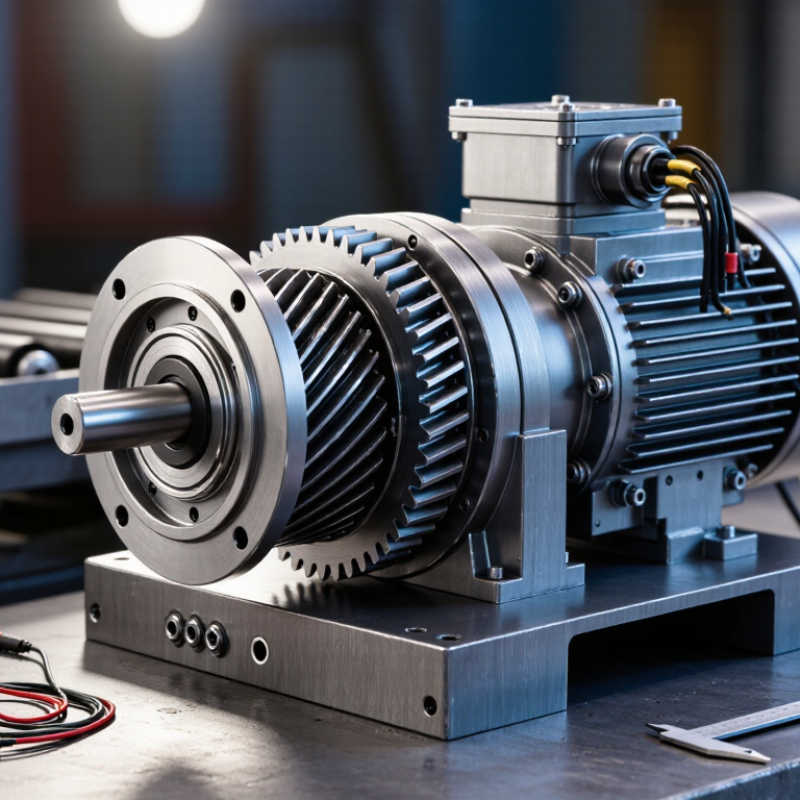
2026 Best Powerful Gear Motor for Global Buyers
A gear motor combines an electric motor with a gearbox. The motor creates rotation, while the gearbox trades speed for torque. This matters because real machines rarely need maximum speed. Conveyors, mixers, lifting systems, and automated gates often need controlled force at a steady pace.
Power is more than a wattage number. It includes torque, operating speed, duty cycle, thermal capacity, and starting load. A 750-watt gear motor may outperform a 1.5-kilowatt unit when its reduction ratio fits the application better. The International Energy Agency reports that electric motor systems consume roughly 40% of global electricity. Better sizing can therefore reduce wasted energy and unnecessary heat. U.S. Department of Energy guidance also shows that motor-driven systems can represent over half of industrial electricity use in some facilities. These figures make efficiency a purchasing issue, not a technical footnote.
Tips: Calculate required torque before comparing power ratings. Check continuous and peak loads separately. Confirm voltage, enclosure protection, mounting position, noise limits, and ambient temperature. Ask for efficiency data at the actual working point. Do not trust peak power alone. A practical test with the real load remains valuable, although many buyers skip it under time pressure. That choice can create vibration, overheating, or premature gear wear. Even experienced engineers sometimes specify too much capacity, which raises cost without improving performance.
2026 Best Powerful Gear Motor for Global Buyers
Gear motor design directly shapes torque, efficiency, noise, and service life. Spur gear motors use simple, straight teeth and suit compact, cost-sensitive equipment. However, their tooth contact can increase noise under heavy loads. Helical gear motors engage gradually, creating smoother operation and higher load capacity. Their efficiency commonly reaches 90% to 95% in practical applications, depending on ratio, lubrication, and loading.
Planetary gear motors distribute torque across several gears. This structure delivers high torque density and strong shock resistance. It also demands precise manufacturing and careful maintenance. Worm gear motors provide large reduction ratios in small spaces. Their efficiency may fall below 80%, especially at higher ratios, because sliding contact creates heat. The trade-off is real. A self-locking effect can help some lifting designs, but it may reduce energy performance.
The International Energy Agency reports that electric motor systems consume roughly half of global electricity. Its motor-driven systems analysis identifies efficiency improvements as a major energy-saving opportunity. IEC 60034-30-1 also defines efficiency classes for motors, helping buyers compare performance beyond nameplate power. In field selection, measure output torque, duty cycle, ambient temperature, and starting load. Torque tells only part. A planetary unit may outperform a worm unit in continuous duty, yet cost more and require tighter alignment. I have seen specifications judged by peak torque alone, which is a weak practice. Real efficiency changes with speed, load, heat, and installation accuracy.
| Gear Motor Type | Core Design | Typical Reduction Ratio | Typical Output Torque Range | Typical Efficiency | Torque and Load Characteristics | Key Advantages | Main Limitations | Common Industrial Uses |
|---|---|---|---|---|---|---|---|---|
| Helical Gear Motor | Parallel or inline helical gears with angled teeth that engage gradually. | Approximately 2:1 to 400:1, usually in multiple stages. | Approximately 20 to 20,000 N·m, depending on frame size and gearing. | 90%–97% | High continuous torque, smooth power transmission, and good radial-load capability when properly supported. | High efficiency, low operating noise, compact inline construction, and reliable continuous-duty performance. | Usually more expensive than basic spur gearing; axial forces require suitable bearing design. | Conveyors, packaging equipment, mixers, material-handling systems, and production machinery. |
| Bevel-Helical Gear Motor | Combines bevel gearing for a 90-degree direction change with helical stages for efficient reduction. | Approximately 3:1 to 300:1. | Approximately 100 to 50,000 N·m. | 92%–97% | High torque at right-angle output, strong overload capability, and stable performance under continuous loads. | Efficient right-angle transmission, high mechanical strength, and flexible mounting arrangements. | Larger and heavier than many inline designs; installation alignment and lubrication are important. | Heavy conveyors, elevators, cranes, bulk-material handling, and process equipment. |
| Planetary Gear Motor | Multiple planet gears share load around a central sun gear inside an outer ring gear. | Approximately 3:1 to 10,000:1, depending on the number of stages. | Approximately 10 to 100,000 N·m. | 94%–98% | Very high torque density, excellent shock-load resistance, and low backlash in precision configurations. | Compact for its torque capacity, high power density, strong load sharing, and broad speed-reduction range. | Higher purchase cost, more complex manufacturing, and greater sensitivity to lubrication quality and assembly precision. | Robotics, servo systems, mobile machinery, automation, wind-energy drives, and high-load positioning equipment. |
| Worm Gear Motor | A worm screw meshes with a worm wheel, typically producing a compact right-angle drive. | Approximately 5:1 to 3,000:1 in one stage or combined arrangements. | Approximately 10 to 10,000 N·m. | 50%–92% | High starting torque and strong reduction in a compact housing; self-locking behavior may occur at selected ratios and conditions but must not be assumed without verification. | Low cost, quiet operation, compact right-angle layout, and simple installation. | Lower efficiency than most helical or planetary designs, heat generation at high ratios, and sliding wear. | Gates, lifts, conveyors, rotary tables, packaging machines, and light-to-medium industrial drives. |
| Spur Gear Motor | Straight-cut cylindrical gears transfer power between parallel shafts. | Approximately 2:1 to 100:1, commonly in several stages. | Approximately 0.1 to 5,000 N·m. | 85%–95% | Suitable for moderate loads and simple speed reduction; performance is best when shock loads and noise are limited. | Simple construction, economical production, easy maintenance, and good efficiency at moderate speeds. | Higher noise and vibration than helical gears; lower smoothness and limited suitability for high-speed heavy-duty operation. | Small conveyors, actuators, appliances, feeders, vending equipment, and general-purpose automation. |
| Cycloidal Gear Motor | An eccentric bearing drives a cycloidal disc against a ring of fixed pins, distributing load across multiple contacts. | Approximately 6:1 to 6,500:1. | Approximately 50 to 60,000 N·m. | 85%–95% | Excellent shock-load resistance, high intermittent torque, low backlash, and strong performance during frequent starts and stops. | High overload capacity, long service life under demanding duty, and compact high-ratio reduction. | May produce more vibration than precision planetary units; eccentric components require accurate assembly and lubrication. | Robotics, indexing systems, agitators, conveyors, wastewater equipment, and heavy-duty automation. |
Note: Torque, ratio, and efficiency figures are typical engineering ranges for industrial gear motors. Actual performance depends on motor power, speed, duty cycle, frame size, lubrication, ambient conditions, transmission stages, and operating temperature.
2026 Best Powerful Gear Motor for Global Buyers
How to Match Gear Motor Specifications to Industrial Applications
A gear motor should be selected from the machine’s load profile, not its catalog rating. Measure required torque, output speed, acceleration, and operating hours. The U.S. Department of Energy reports that motor-driven equipment uses roughly 70% of electricity in U.S. manufacturing. Efficiency deserves attention.
For conveyors, calculate starting torque with the heaviest product included. A practical formula is torque equals force multiplied by radius. Choose a gearbox with sufficient service factor for shocks, jams, and frequent starts. Helical gears suit continuous transport, while worm gears provide compact reduction and useful holding performance. However, worm gearing can lose more energy through heat.
Check the duty cycle carefully. Ten starts per hour is different from ten starts per minute. IEC 60034-30-1 efficiency classes help compare motor performance across markets. Select the correct IP rating for dust, washdown water, or outdoor exposure. Confirm mounting position, shaft direction, brake needs, and ambient temperature. Small oversights become expensive.
The IEA identifies industrial motor systems as a major global efficiency opportunity. Yet efficiency alone cannot rescue a poorly matched gearbox. I have seen oversized units run inefficiently under light loads. That mistake is common. A smaller, correctly loaded motor may deliver better lifetime results. Verify vibration, noise, thermal rise, and maintenance access during commissioning, not only during purchase.
A powerful gear motor begins with material selection, not marketing claims. Hardened alloy steel gears resist tooth wear under repeated loads. Bronze can reduce friction in worm drives, while sealed bearings protect against dust and moisture. The U.S. Department of Energy reports that motor systems can consume more than 70% of industrial electricity. Small efficiency losses therefore become expensive over time.
Controls matter just as much. Variable-frequency drives can reduce starting shock and adjust speed to real demand. Encoders improve positioning, although they add cost and maintenance points. For exposed machinery, choose an appropriate IP-rated enclosure, thermal protection, overload detection, and an emergency stop circuit. IEC 60034-30-1 provides a recognized framework for motor efficiency classes. ISO 13849-1 also helps engineers evaluate safety-related control systems. Specifications alone are not enough. Installation errors still cause failures.
Tips: Match the gearbox ratio to the real load cycle. Check peak torque, not only rated power. Ask for efficiency test conditions and duty-cycle data. Keep a spare seal kit nearby. A perfect calculation can still miss corrosion, poor alignment, or unstable voltage. That is where field inspection matters.
2026 Best Powerful Gear Motor for Global Buyers
How Global Buyers Can Evaluate Suppliers, Costs, and Compliance
Choosing a powerful gear motor starts with the application, not the catalog. Define load, speed, operating hours, starting torque, and installation space. Ask suppliers for torque curves, duty-cycle data, noise readings, and thermal limits. A reliable supplier explains testing methods instead of showing impressive numbers alone. Request production samples, inspection records, and clear responses about motor winding, gearbox materials, seals, and lubrication. Real evidence matters.
Compare total landed cost, not only the unit quotation. Include tooling, packaging, freight, import duties, spare parts, and warranty support. Check whether the quoted price includes connectors, mounting hardware, or performance testing. The cheapest offer may create higher maintenance costs later. Currency changes can also affect budgets. A spreadsheet helps, but it can miss delays and service problems. That deserves reflection.
Compliance requires careful document matching. Confirm voltage, frequency, efficiency, safety, electromagnetic compatibility, and environmental requirements for each destination. Ask for test reports, declarations, material information, and traceable model numbers. Certificates should cover the exact motor and gearbox configuration. Be cautious when documents show a similar model only. Confirm factory quality controls, batch inspections, and corrective-action procedures. Requirements differ between markets, and assumptions can be costly. When technical claims remain unclear, request written clarification before placing a deposit.
IE3 minimum motor-efficiency thresholds provide a measurable starting point when global buyers compare gear-motor suppliers, operating costs, and compliance documentation. The figures below apply to four-pole, 50 Hz motors and should be checked against the applicable standard and motor design.
Source: IEC 60034-30-1 efficiency-class framework, IE3 minimum efficiency values for four-pole, 50 Hz motors. Buyers should also verify rated torque, service factor, thermal class, ingress protection, voltage/frequency compatibility, CE or other market requirements, RoHS/REACH status where applicable, warranty terms, and total cost of ownership.
Spur motors use straight teeth and suit compact, cost-sensitive machines. They can become noisy under heavy loads. Helical motors run more smoothly and handle continuous loads better. Planetary motors provide high torque density and strong shock resistance. Worm motors offer large reduction in a small space. Their sliding contact can create more heat.
Helical gear motors commonly reach 90% to 95% efficiency. Actual results depend on speed, lubrication, load, and alignment. Worm motors may fall below 80% at high reduction ratios. That difference matters during long operating hours. Efficiency is not fixed.
Use the machine’s real load profile. A basic formula is torque equals force multiplied by radius. Include product weight, friction, acceleration, and starting resistance. For a conveyor, calculate torque with the heaviest load included. Peak torque alone gives an incomplete answer. I have seen that mistake.
Check output torque, speed, acceleration, operating hours, and starting load. Review the duty cycle carefully. Ten starts per hour differs greatly from ten starts per minute. Also confirm mounting position and shaft direction. A small oversight can become expensive.
No. An oversized motor may run inefficiently under light loads. It can also increase purchase, energy, and maintenance costs. A correctly loaded smaller unit may perform better over time. Still, include a suitable service factor for shocks and jams. Bigger is not automatically better.
Helical gearing often suits continuous conveyor operation. It provides smooth engagement and useful load capacity. Worm gearing can provide compact reduction and holding performance. However, heat losses may be higher. Check starting torque with the heaviest product present. Do not trust catalog ratings alone.
Hardened alloy steel gears resist repeated tooth wear. Bronze can reduce friction in some worm drives. Sealed bearings help block dust and moisture. Choose an enclosure suited to dust, water, or outdoor exposure. Keep a spare seal kit nearby. That small habit helps.
Variable-frequency drives can reduce starting shock and match speed to demand. Encoders improve positioning but add cost and maintenance points. Thermal protection helps prevent overheating. Overload detection protects against jams and abnormal loads. Emergency stop circuits support safer machinery operation. Controls need correct installation.
Measure vibration, noise, thermal rise, and actual operating current. Check alignment, lubrication, voltage stability, and maintenance access. Inspect the motor after sustained operation, not only during startup. Listen for unusual gear noise. Small issues may grow quickly. Field conditions can surprise you.
In 2026, a Powerful Gear Motor is essential for industries that require reliable torque, stable speed control, and efficient energy use. This article explains how gear motors combine an electric motor with a gearbox to deliver controlled mechanical power, and why power rating, torque capacity, duty cycle, and efficiency matter when selecting equipment. It also compares common gear motor designs, including inline, parallel-shaft, helical, planetary, and worm configurations, highlighting their differences in load handling, operating precision, size, and maintenance needs.
The guide shows global buyers how to match motor specifications with applications such as conveyors, automation systems, lifting equipment, packaging machinery, and material handling. It also examines the value of durable materials, thermal protection, sensors, variable-speed controls, braking systems, and safety features. Finally, buyers will learn how to evaluate suppliers through total cost, customization, documentation, quality assurance, delivery capability, and compliance with applicable international standards.

Syncdrive Motor